Last week at the PPA Festival
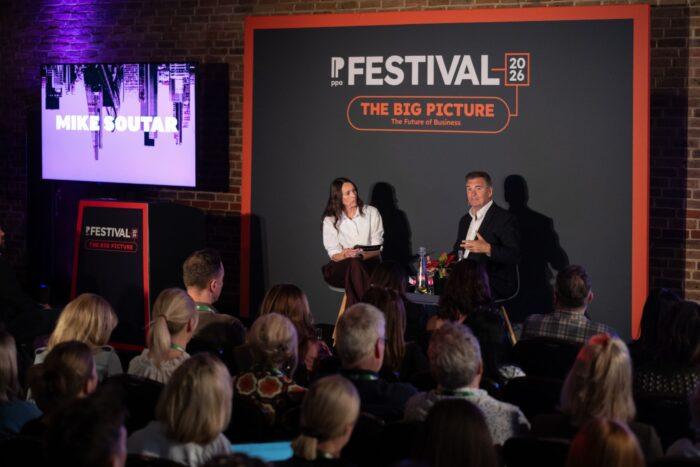
I was interviewed on stage by the brilliant Lisa Smosarski in front of a packed audience.
Lisa’s sharp, funny, curious and one of those interviewers who actually listens to your answers rather than simply waiting for the next question on the card.
The strange thing about being interviewed on stage is this:
It looks easier than public speaking. But in reality, it can be harder.
When you’re giving a speech, you control it all: the rhythm, pacing, tone, direction and – most importantly of all – the narrative. You know what’s coming next.
In an interview, you hand most of that control away.
That’s what makes it dangerous and also exciting.
Over the years I’ve learned a few slightly counter-intuitive ways to stay in the zone before stepping onto a stage where somebody else has the controls in their hands:
- If you dry up, don’t panic and fill the silence with noise. Most audiences are far more forgiving of a thoughtful pause than a panicked avalanche of words.
- Don’t fear the curveball question. The audience can smell over-rehearsal instantly. Slight unpredictability keeps you on your toes and creates energy, spontaneity and humanity.
- Prepare stories, not scripts. Good interviewees carry vivid examples, moments and observations in their head, rather than polished paragraphs.
- Pause to reflect on questions. Most people speed up when nervous. The strongest interviewees often do the opposite. Silence can look like authority – even when it’s just buying you time to think.
- Treat the interview like a collaborative exercise, not a defensive one. The strongest conversations can occur when both sides are trying to explore something interesting rather than simply protecting their own position. Oddly enough, giving away a little control can make you appear more confident, rather than less.
Thanks again to Lisa for making the half hour fly past!